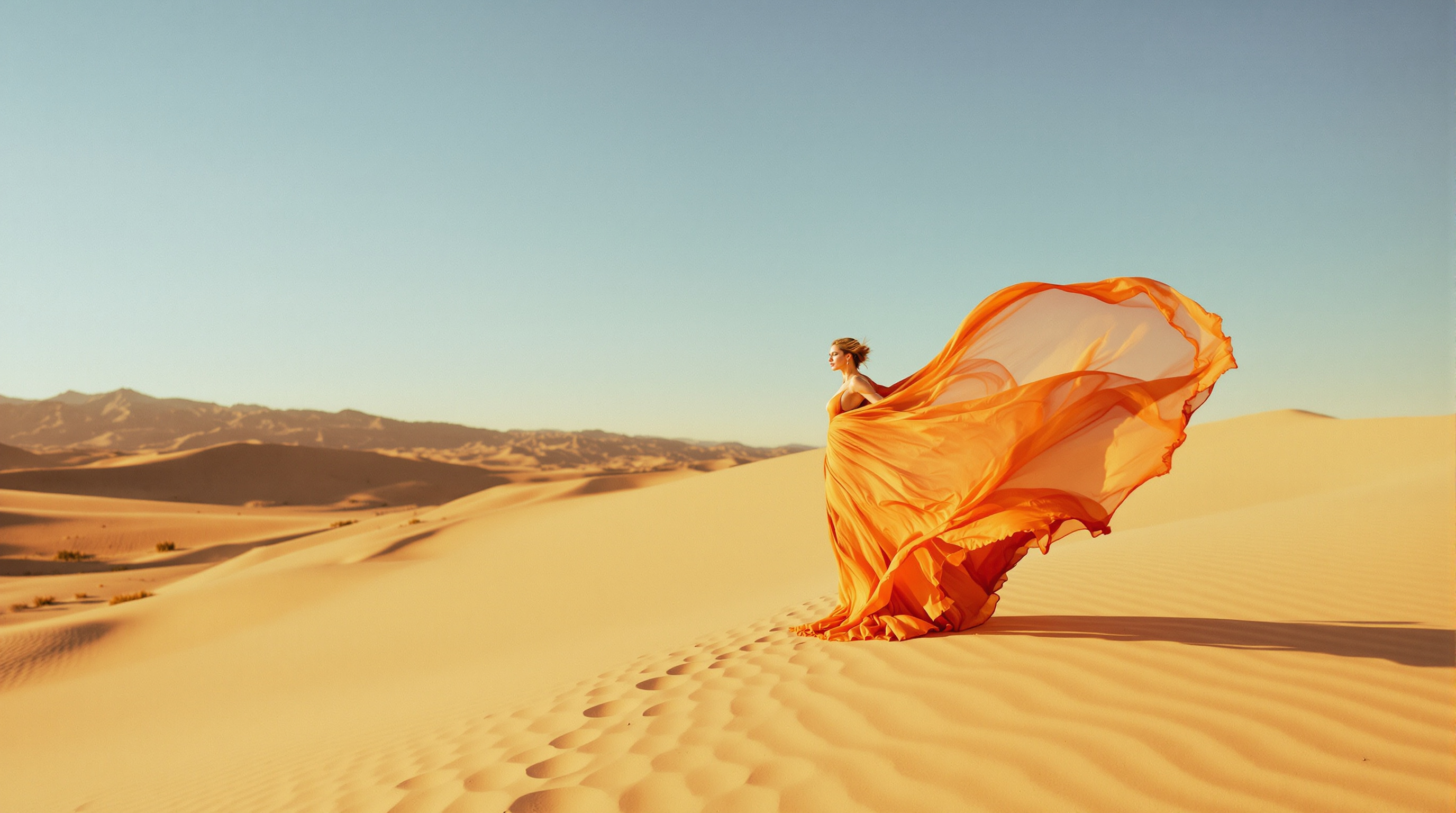
Location & Natural Light: The Figure Outdoors
The studio gives you control; the location gives you a collaborator. A dune, a doorway, a shaft of afternoon light — the world lends the figure a context the studio can only imitate.
Some of the most enduring figure and portrait photography has been made far from any studio. Working on location trades the studio's precision for the landscape's mood, weather, and scale. It was the working method of many great location photographers — John Running among them, who spent decades photographing people in the light of the American Southwest, the Caribbean, and beyond. This essay covers the craft of using the world as a light source and a stage.
The quality of natural light
Sunlight changes character by the hour. Golden hour — the window after sunrise and before sunset — gives long, warm, low-angled light that flatters skin and rakes across the landscape. Open shade, the soft light found beside a building or under a canopy, behaves like an enormous softbox and is a portraitist's best friend at midday. Overcast skies turn the whole heavens into a giant diffuser. The location photographer learns to read these conditions the way a sailor reads wind, and to plan a shoot around the light rather than the clock.
Landscape as collaborator
On location, the setting is never neutral. A vast desert dwarfs the figure and speaks of solitude; an intimate interior wraps it in warmth; architecture lends line and geometry. The strongest location work treats the environment as a second subject, composing the figure into the landscape rather than merely in front of it. Scale, negative space, and leading lines — the same tools discussed in posing and the language of the body — now operate across an entire vista.
Shaping available light
Working outdoors does not mean surrendering control. A simple reflector bounces warm fill into shadowed faces; a scrim or diffusion panel softens harsh sun; a single battery-powered flash can balance a bright sky or add a sculptural edge at dusk. The best location photographers travel light and improvise, using the sun as key and a reflector as fill — a whole studio in a shoulder bag.
Logistics, permissions, and respect
Location work carries practical duties: scouting sites and their light in advance, securing any necessary permits for public or protected land, watching the weather, and — always — protecting the comfort and dignity of the subject in a space with less privacy than a studio. Public-land guidance from the National Park Service is worth consulting for any shoot on protected ground. The same ethical standards that govern the studio apply, with the added care that outdoor settings demand.