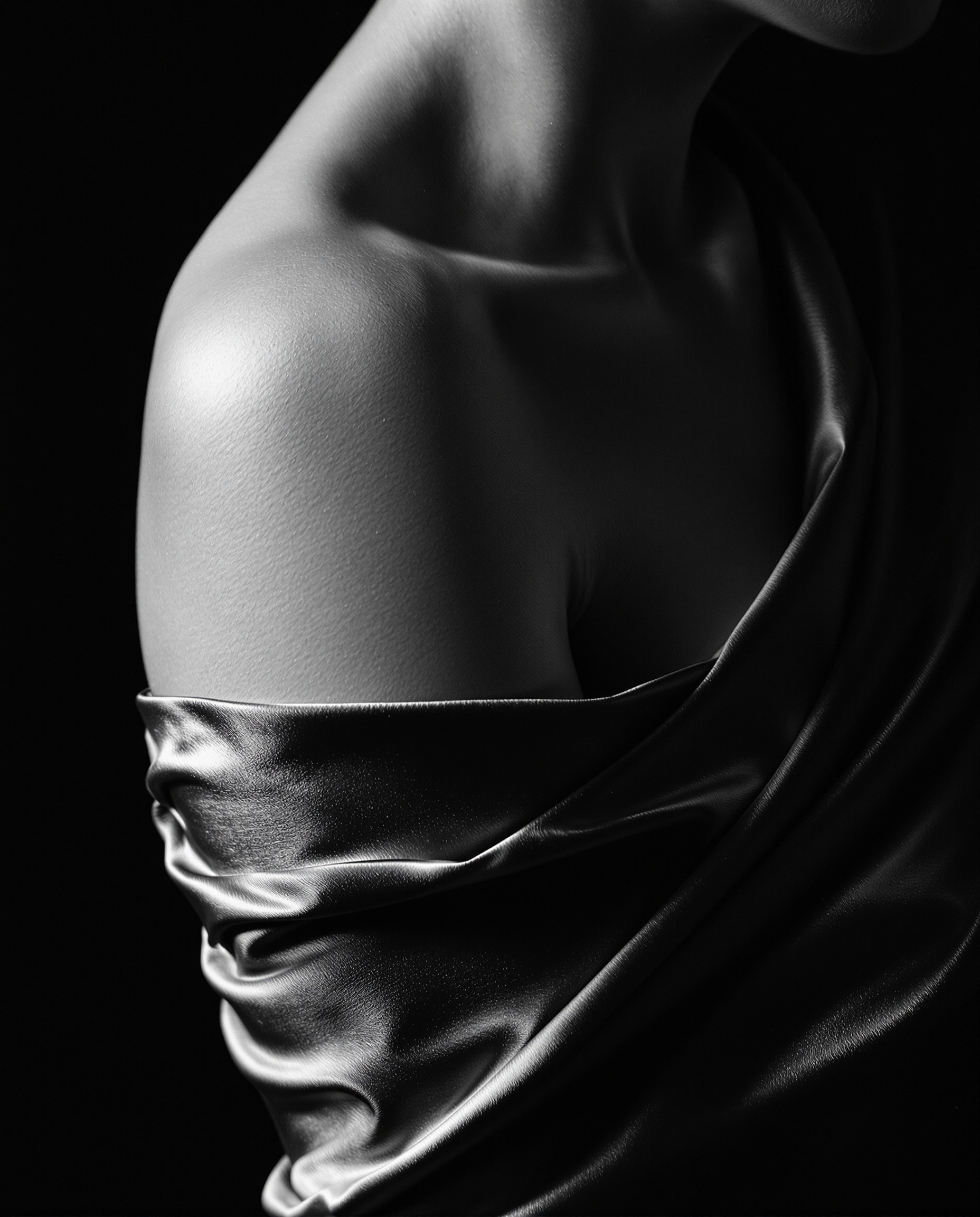
Black & White and the Sculptural Figure
Strip a picture of color and you strip it of distraction. What remains is light, form, and tone — the exact language the figure speaks most fluently.
There is a reason the most celebrated figure photographs in history are, overwhelmingly, in black and white. Monochrome removes the incidental — a color, a blemish, a wallpaper — and leaves only structure. It abstracts the body into geography: a shoulder becomes a hill, a spine becomes a river's course, a hip becomes a dune. This essay is about why that abstraction is so powerful and how photographers pursue it.
Tone is the subject
In black-and-white work, the photographer thinks in tonal values — the full range from paper white to deep black and every grey between. A figure lit for monochrome is lit for its shadow shapes and highlight transitions, not its coloring. This is why hard, directional light and low lighting ratios feature so heavily in the genre: they carve the body into distinct planes of tone. The great modernist Edward Weston printed his figure studies so that a thigh in shadow held the same quiet authority as a photographed pepper — pure form, rendered in grey.
Abstraction and dignity
Abstraction also confers dignity. When a body is rendered as a study of light and curve rather than as an identifiable, colored individual, the picture reads as sculpture rather than exposure. Ruth Bernhard built an entire, decades-long career on this principle, arranging the figure into forms so formal and chaste they might be architectural drawings. Monochrome is, in a real sense, the genre's built-in discretion: it elevates and it protects at once. The figure holdings of the Getty Museum demonstrate this again and again.
Grain, print, and the handmade object
Black-and-white photography also foregrounds the materiality of the medium. Film grain, the warmth of a selenium-toned print, the deep blacks of a well-made darkroom enlargement — these give the image a handmade, object quality that suits an art meant to be held and kept. Even in digital capture, photographers emulate this texture, because a slightly grained monochrome frame feels timeless in a way that a clean color file rarely does.
When to reach for it
Not every picture wants monochrome. Glamour and beauty work often thrives on the warmth of skin and the color of silk. But when the goal is the figure as form — sculptural, abstract, dignified — black and white remains the most direct route there. It is the genre's oldest and most reliable act of restraint. Readers curious about how this tonal thinking developed will find context in the journal's history of the figure in photography.