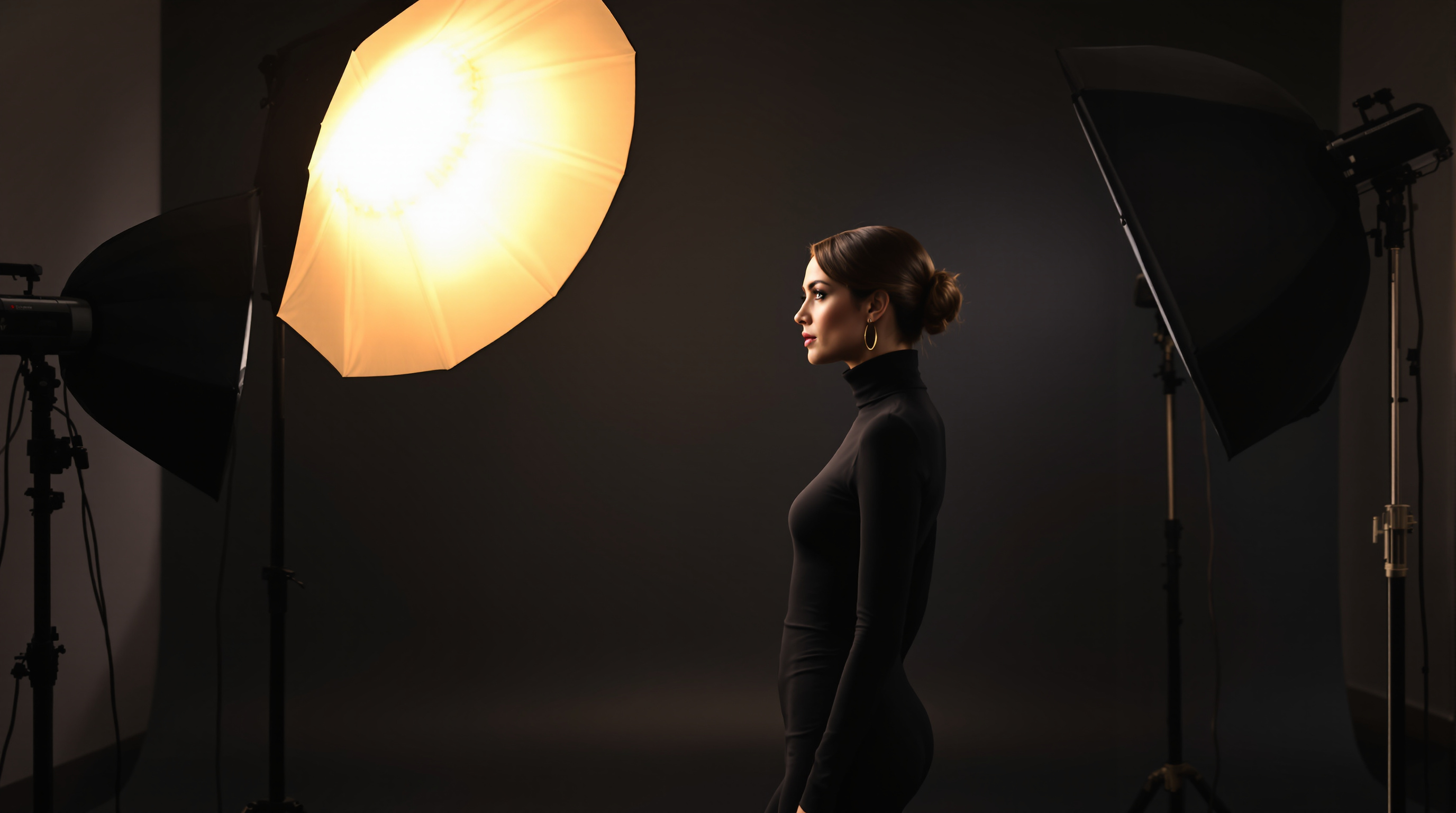
Lighting the Figure
Light is the medium's only raw material. Learn to shape it and you can make an ordinary room feel like a cathedral and a nervous subject feel like the only person in the world.
Every figure and portrait photograph is, underneath, a lighting decision. Where the light comes from, how large it is, and how far it falls — these determine whether a body reads as soft and inviting or hard and sculptural. This essay covers the vocabulary a photographer needs before touching a single dial.
Soft light versus hard light
The single most important variable is the apparent size of the source relative to the subject. A large source close to the body — a big softbox, an open window, an overcast sky — wraps around forms and renders skin gently, with a gradual shadow edge. A small or distant source — a bare bulb, a hard reflector, midday sun — produces crisp, defined shadows and emphasizes texture and muscle. Neither is better; the choice is expressive. Glamour and beauty work often favors soft, flattering light, while a sculptural figure study may want something harder and more directional.
The classic portrait patterns
Studio tradition names a handful of lighting patterns by the shadow they cast on the face. They apply equally to the figure:
- Loop lighting — the source slightly above and to one side, casting a small loop of shadow from the nose. The everyday workhorse; flattering on most faces.
- Rembrandt lighting — steeper and more dramatic, leaving a small triangle of light on the shadowed cheek. Moody, painterly, named for the master himself.
- Butterfly (or Paramount) lighting — the source high and directly in front, casting a small butterfly shadow under the nose. The classic glamour and beauty light of the Hollywood studios.
- Split lighting — the source at ninety degrees, dividing the subject into light and dark halves. Bold and sculptural; ideal for a dramatic figure study.
Ratios and the shape of shadow
The lighting ratio — the difference in brightness between the lit and shadowed sides — sets the emotional temperature. A gentle 2:1 ratio is airy and commercial; a 4:1 or 8:1 is dramatic and intimate, letting the body dissolve into shadow. Fill can come from a reflector, a second softened light, or simply a bright wall. Learning to see ratio is what separates a snapshot from a photograph.
Modifiers, briefly
Softboxes and octaboxes give clean, controllable soft light. A beauty dish gives a crisp-but-flattering quality prized in beauty work. Umbrellas are cheap and broad; grids and flags let you carve light off where you do not want it. Bare heads and hard reflectors are for the sculptural, high-drama look. The tool matters less than the intention behind it.
Lighting is a lifelong study. For rigorous technical grounding, the education resources of Professional Photographers of America are a reliable reference. When you are comfortable with light, move on to posing and the language of the body, where light and form finally meet.